Water Heater Repair in Woodstock, GA
A heater that stops heating is not always a heater that needs replacing. We diagnose the failed part first, fix what is honestly fixable, and say plainly when replacement wins.
Request Service
Tell us what is happening and we will call you back to confirm a visit.
For water heater repair Woodstock homeowners can get a straight answer, we test the unit before we recommend anything, fix the failed part when repair is honest, and tell you plainly when a new unit is the better spend. We repair tank and tankless units across Woodstock in Cherokee County, and we aim to get a technician to you the same day you call.
A repair visit starts with testing, not with a part
At a glance
- Tank and tankless repair in Woodstock homes
- Diagnosis before parts: testing first, verdict second
- Common tank faults: thermostat, element, anode, sediment, relief valve, pilot parts, gas valve
- Common tankless faults: scale, flow sensor, igniter, venting
- Upfront pricing before work starts, and a plain repair-or-replace verdict
A water heater that stops heating is giving you a symptom, not a diagnosis. Cold water, lukewarm water, water that runs hot and then cold, a pilot that will not stay lit, a unit that rumbles, a puddle near the base: each of those can come from more than one cause, and the wrong part swapped in a hurry leaves the real cause in place. So a repair visit starts with questions and tests. What changed, and when? Is the problem steady or does it come and go? Does it affect every tap or only one? Is the unit gas or electric, tank or tankless? Those answers narrow the fault before a panel comes off.
Then we test in order. On a tank unit we check power or gas supply, thermostat settings, element resistance on an electric unit, pilot and thermocouple behavior on a gas unit, and the temperature and pressure relief valve path. On a tankless unit we check flow rate, inlet filter condition, error codes where the unit displays them, gas supply under load, and venting. We explain each finding as we go, in plain terms, so you can follow the reasoning rather than taking a verdict on trust.
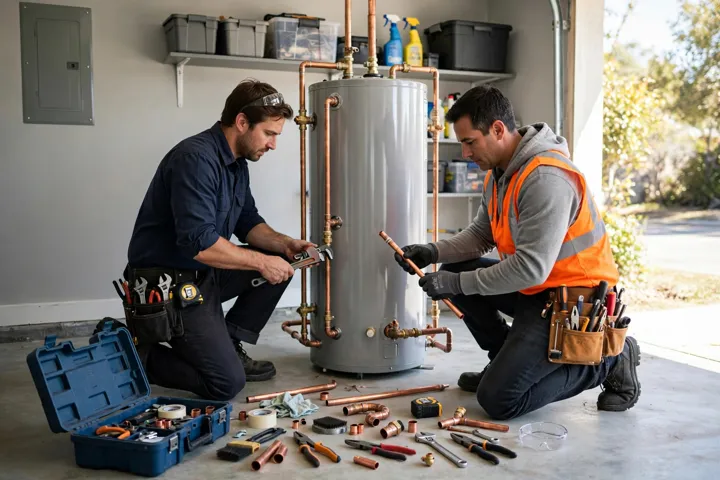
Tank failures we fix, and what each one feels like
A thermostat that fails usually shows up as water that is too cold, too hot, or hot for a short while and then cold. An electric tank has two thermostats and two elements, upper and lower, and they work as a pair: the upper heats first, then hands over to the lower. When one side fails, the tank delivers a fraction of its stored hot water and then runs cold, which feels like the tank shrank overnight. Testing tells us which side failed, and replacing only that side is a proper repair.
An element that burns out behaves much the same way, and the test is direct: resistance across the element tells us whether it still heats. A tripped reset button, the high-limit control, is often the first thing we check, because it can trip after an overheating event or a thermostat fault, and resetting it without finding why it tripped only buys a short delay. We find the cause behind the trip, not just the button.
Sediment is the slow fault. Hard water leaves mineral scale inside the tank, and that sediment settles on the bottom, where it insulates the water from the burner or element below it. The unit works harder, heats slower, and starts to rumble or pop as water trapped under the sediment layer boils and escapes. Flushing sediment helps when the tank body is still sound, and we will show you what came out so the advice is visible rather than claimed. When sediment has built for years and the tank already delivers rusty water, flushing will not restore the steel, and that is a replacement conversation, covered on our water heater replacement page.
The anode rod is the part most homeowners never hear about until it is gone. It is a sacrificial rod inside the tank that corrodes so the steel tank does not. Once it is eaten away, the tank itself starts to corrode, and rusty water is often the first sign. Replacing an anode rod in a sound tank is one of the cheapest life-extending repairs there is, and we check its condition on repair visits where access allows, because a rod replaced in time can add years to a tank that otherwise would have failed early.
The temperature and pressure relief valve is the safety release, and it deserves respect rather than improvisation. A valve that drips steadily can point to excess pressure, a failed expansion setup, or a valve that itself has worn out. We test which one it is, because replacing the valve while the pressure problem remains only moves the symptom. A valve that has been capped, plugged, or tampered with is a different conversation entirely, and we will tell you plainly that it needs correcting before anything else.
Gas tank faults have their own list. A pilot that will not stay lit often traces to a weak thermocouple, the small sensor that proves the flame is present, or to a pilot assembly choked with dust and lint. A gas valve that will not open, or that delivers an unsteady flame, is tested rather than assumed, and a valve replacement is quoted only after the simpler causes are ruled out. A dip tube that has broken or worn short sends cold water straight to the top of the tank, so showers run cold even though the burner works fine, and that is a part-level fix in a sound tank.
What we do not repair is a tank body that leaks. A leak from a seam, a fitting that has corroded into the tank wall, or the tank body itself cannot be patched into a lasting fix, and any patch that holds for a week only delays the replacement while water keeps finding its way out. When we find that, we say so on the spot and talk through replacement rather than selling a repair that will fail.
Tankless failures we fix, and why they differ
A tankless unit has no stored water to hide behind, so its faults show up as flow and temperature behavior. The most common one in this area is scale. Hard water leaves mineral deposits inside the heat exchanger, narrowing the passages and making the unit work harder for less hot water. The symptom is gradual: showers that used to run hot now run lukewarm, or the unit cuts out under a heavy draw. Descaling, flushing the exchanger with the service valves the unit was installed with, restores flow when the exchanger is still sound, and we show you the service routine so it becomes planned maintenance rather than a surprise repair.
A flow sensor that misreads will starve the burner or shut the unit down at low flow, so a tap that runs fine on a tank system seems to confuse a tankless unit. An igniter or flame sensor that has worn out produces the classic pattern of a unit that tries to fire, fails, and tries again. Venting problems produce a different signature: a unit that runs briefly and then faults, or that faults only on cold or windy days, often has a vent path that does not meet the unit's requirements or has come loose. Gas supply under load is the last check that matters, because a tankless burner at full fire draws gas far faster than a tank burner, and a line that fed a tank fine can starve a tankless unit exactly when demand peaks.
Tankless repair pricing follows the same honesty rule as tank repair: the fault is found first, the fix is quoted before work starts, and if descaling reveals an exchanger that is already damaged beyond cleaning, we say so rather than charging for a flush that cannot help. When a tankless unit cannot honestly cover the household even after repair, the comparison with a tank option lives on our tankless water heater page and our water heater installation page.
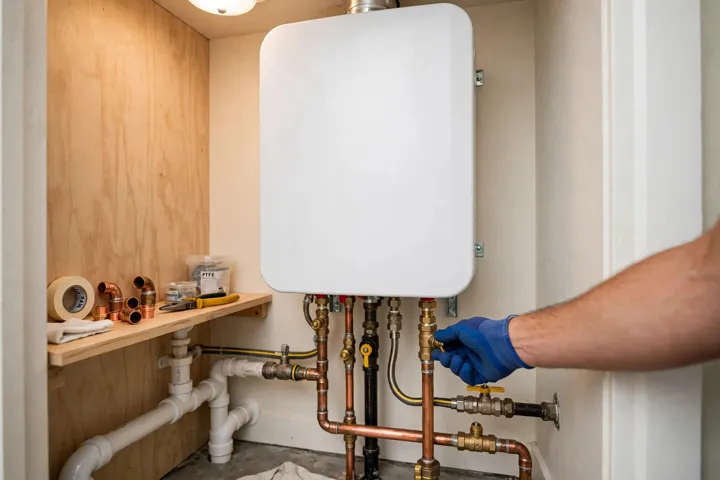
When repair wins, and when replacement wins
The verdict comes down to three questions: is the tank body sound, is the fault confined to a part, and does the repair leave you with a unit that has useful life left. When all three answers are yes, repair wins, and it usually wins by a wide margin. When the body leaks, when rusty water shows the steel itself is failing, or when the unit has already needed several part swaps in a short span, replacement wins, because another repair only buys a short delay at nearly the cost of the decision you are avoiding.
Age alone does not decide it, and we do not use a birthday to sell a unit. A well kept tank with a single failed part is a repair. A younger tank with a leaking body is a replacement. The test results and the condition of the steel decide, and we walk you through both before you choose.
| What you are seeing | Repair usually fits | Replacement wins |
|---|---|---|
| Cold showers, tank body dry and sound | Failed thermostat, element, or reset | Tank body leaking or rusted through |
| Lukewarm water that fades fast | Failed lower element or broken dip tube | Heavy sediment with rusty water |
| Pilot will not stay lit | Weak thermocouple or dirty pilot assembly | Gas valve failed and tank aged out |
| Rumbling or popping | Sediment flush in a sound tank | Sediment plus rust, tank steel failing |
| Tankless runs lukewarm | Descaling a sound exchanger | Exchanger damaged beyond cleaning |
| Tankless faults under heavy draw | Flow sensor, igniter, or venting fix | Unit undersized for the household demand |
What the visit looks like, step by step
You tell us the symptom, the fuel, and whether the unit is a tank or tankless, plus anything you have already noticed: a puddle, a smell, a noise, a pattern by time of day. That history decides what we bring and where we start. On arrival we isolate power or gas as needed, run the tests that match the symptom, and give you the finding in plain language before any part is ordered or fitted.
Pricing comes before work starts, and it covers the part, the labor to fit it, and any testing after the fix. If testing reveals a second fault behind the first, you hear about it before we proceed, not after. Once the fix is in, we run the unit through its paces: hot water at a tap, steady temperature under a normal draw, no leaks at any joint we touched, and the relief valve path checked. We leave the work area tidy, and we leave you with what to watch for: the sound, the temperature pattern, or the drip that would mean calling us back rather than waiting.
How a repair quote is built, and the factors behind every other service price, are laid out on the cost guide. The FAQs page answers the questions that come up on repair visits.
Booking a water heater repair in Woodstock
Tell us what the unit is doing wrong, whether it is gas or electric, tank or tankless, and whether there is any water on the floor around it. Active leaking jumps the queue, so say so first: stop using hot water, and if water is spreading, shut the cold supply to the unit if you can do so safely and tell us you did. A photo of the unit label helps, since the model and capacity sit right on it, and a note about when the problem started helps us judge whether it is a sudden part failure or a slow decline. Cumming-side heater work is covered on our Cumming page.
You can reach us through the form on the contact page or by calling (770) 430-3463. When you book water heater repair Woodstock work with us, you will get testing before parts, upfront pricing before work starts, and an honest verdict: repaired and proven hot, or replaced because repair would only delay the inevitable, with the reasoning shown rather than asserted.

Water heater repair questions, answered here
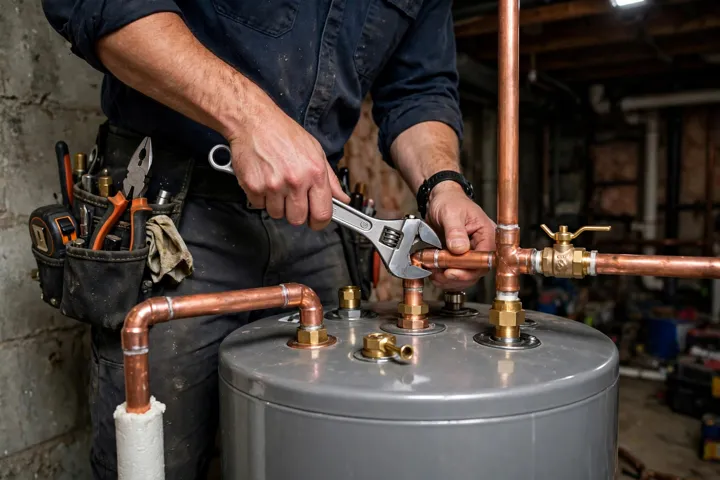
My water is cold but the unit looks fine. Is it a repair?
Often yes. A failed thermostat, a burned out element, or a tripped reset can leave a house cold with a tank body that is still sound. Testing separates those part faults from a failed tank, and part faults are repaired rather than replaced.
The tank rumbles when it heats. Should I worry?
Rumbling usually means sediment has built up inside the tank, and water trapped under that layer is boiling free. Flushing helps when the tank is otherwise sound. If the water also runs rusty, the steel itself may be failing, and that changes the verdict toward replacement.
My tankless unit runs lukewarm. Does it need replacing?
Not usually. Scale inside the heat exchanger is the common cause in hard water areas, and descaling restores a sound exchanger. A flow sensor, igniter, or venting fault can cause the same symptom, and testing finds which one it is before any part is fitted.
Related Services
Repair sits between installation and replacement, and it borrows from both. A first install explains sizing and venting when the fixed unit still leaves the house short on hot water. Replacement explains the end-of-life call, which is the verdict repair has to beat: a sound tank body with one failed part is worth fixing, while a leaking body is not. Tankless repair follows its own fault list, from scale in the heat exchanger to a tired flow sensor, and the tankless page covers that side. Each card below carries its own full page.
Keep Reading
The verdict above settles the repair question; the pages below cover what surrounds it. The Woodstock page shows the home base this crew works from, and the Cumming page shows the Forsyth County side of the same trade. The cost guide separates a repair price from a replacement price, so a part swap can be judged against a new unit honestly. The FAQs answer the cold-shower, pilot-light, and sediment-noise questions that usually arrive before a repair call. If the verdict points past repair, the cost guide and the FAQs together show what a replacement involves and what it costs in factors.