Water Heater Cost Guide for Woodstock, GA
No honest cost guide can quote your job without seeing it. This guide explains what actually drives cost, so you can read any quote with confidence.
What drives the price, service by service
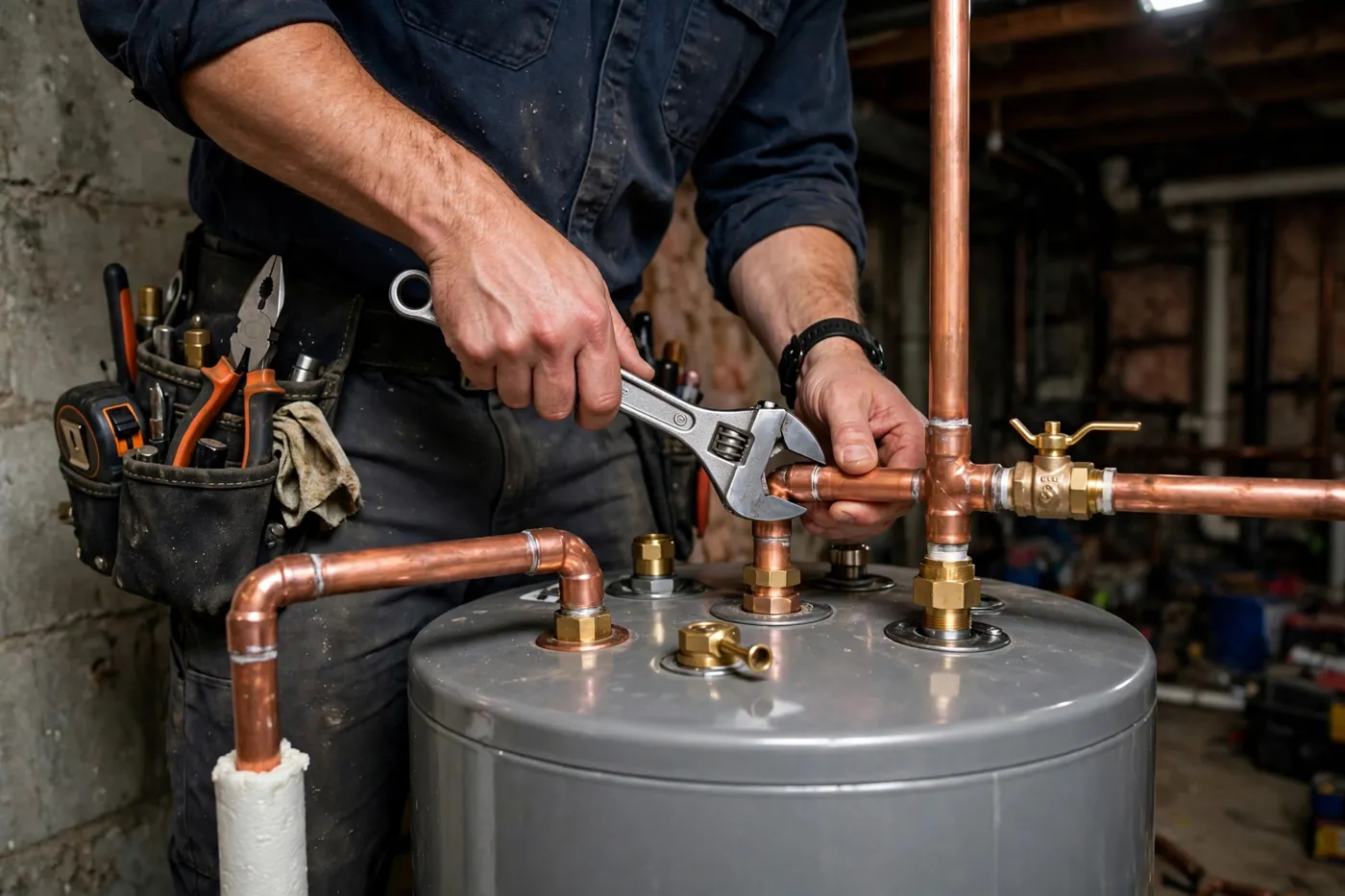
This guide explains what moves a price on each of our services, so you can read a quote and understand it, and so you can compare quotes fairly. It contains no prices of our own, because a price without a diagnosis is a guess, and a guide that pretends otherwise would mislead you. What it does contain is every factor we consider when we price a job, in plain terms, so there are no hidden drivers waiting to surprise you at the end of a visit.
The general rule across all services is the same: access, condition, and scope drive price more than the headline service name does. A straightforward job in an open, accessible spot costs less than the same named job in a tight closet, under a driveway, or behind a failed section of pipe that was worse than anyone expected. That is why we look before we quote a firm price, and why a quote given before anyone has seen the unit should be treated as an estimate, not a promise.
Water heater installation and replacement costs
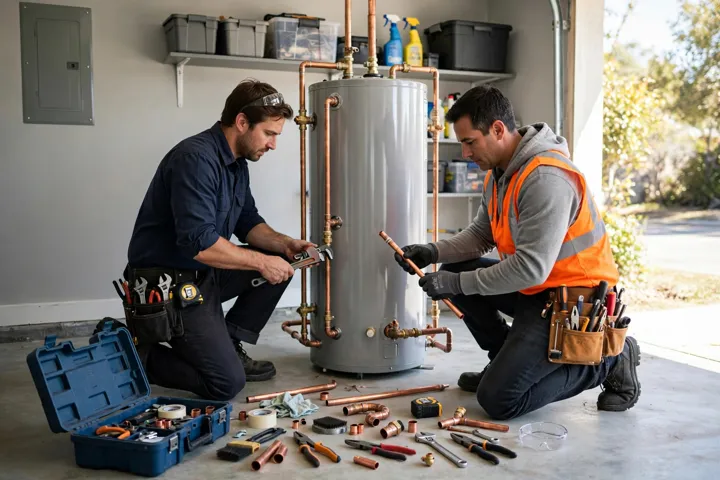
Tank size is the first driver. A larger tank costs more to buy than a smaller one, and the difference is not trivial, because the tank itself is the largest single part of the job. But size should be chosen from household use, not from price alone: a tank that is too small will run out during a morning rush, and replacing it early costs far more than choosing correctly the first time. Our water heater installation page covers sizing from real use, and our water heater replacement page covers the retire-or-repair decision.
Fuel type is the second driver. Gas and electric units differ in unit cost, in connection work, and in what the house must already provide. A gas unit needs a gas supply sized for its burner and a vent path that carries combustion gases safely outside. An electric unit needs the right circuit and breaker capacity. If either the gas supply or the electrical capacity needs upgrading to support the new unit, that work is part of the price, and it should be named in the quote rather than discovered halfway through the install.
Venting changes are a driver that homeowners often do not expect. A vent path that served the old unit may not serve the new one, because venting requirements change between models. A longer vent run, a new termination point, or a change in vent material all add work and parts. We check venting before quoting a firm price, and any venting change is explained before work starts.
Gas-line work is a related driver, and it matters most on larger tanks and on tankless units, where burner input is much higher than on a standard tank. Upsizing a gas line is real work with real parts, and it should appear in the quote as its own line of reasoning, not buried in a single number. Permits where required are another factor: where a permit applies, it is part of the plan and part of the price, confirmed before work starts rather than discovered afterward.
Disposal of the old unit is part of a replacement job, and it should be confirmed in the quote. An old tank full of sediment is heavy and awkward, and removing it is work. Access matters too: a unit in an open garage with a straight path out is a different job from a unit in a tight closet, up a narrow stair, or in a crawl space. Finally, warranty choice moves the price, because tank warranties usually come as 6 or 12 year manufacturer options, and the longer option usually reflects a different internal build. Ask what the warranty covers: the tank, parts, labor, or some combination, because those are different values.
Repair costs follow a different logic from install costs. The driver is diagnosis plus the failed part: a thermostat or element swap is a smaller job than a gas valve or a tankless descaling visit, and the visit itself, including testing, is part of the price either way. When testing shows the body has failed, the honest quote is a replacement, not a repair, and our water heater repair page explains how that verdict is reached.
| Factor | How it moves the price |
|---|---|
| Tank size | Larger tanks cost more to buy, and must match household demand |
| Fuel type | Gas needs venting and gas supply, electric needs circuit capacity |
| Venting changes | New routes, terminations, or materials add work and parts |
| Gas-line work | Upsizing for a larger burner or a tankless unit adds scope |
| Permits where required | Confirmed before work starts, included in the plan |
| Disposal | Old unit removal is part of a replacement job |
| Access | Tight closets, stairs, and crawl spaces add time and handling |
| Warranty option | Longer manufacturer warranty options reflect a different build |
Tankless water heater costs
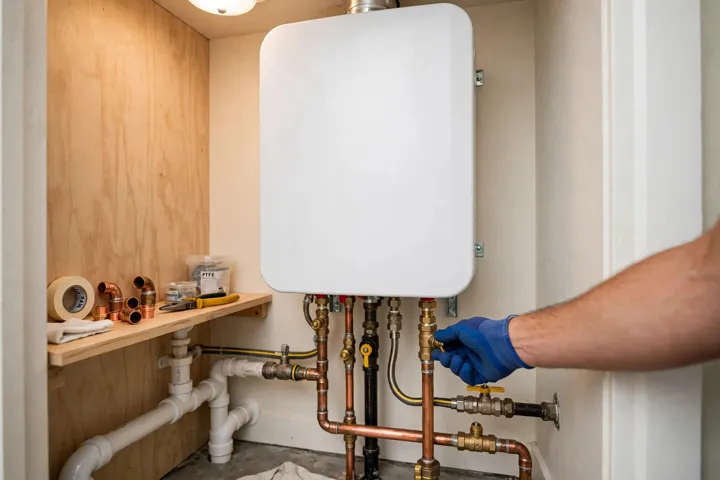
Tankless pricing follows the same factors as tank pricing, plus the ones that are specific to on-demand units. Gas-line sizing is the largest tankless-specific driver, because a tankless burner at full fire consumes gas at a rate no standard tank burner approaches. Many homes need a gas-line upgrade to support a tankless unit, and that upgrade can be a significant part of the job. It should be measured and quoted before installation day, not discovered during it.
Venting is the second tankless-specific driver. Tankless venting must match the unit's requirements for material, routing, and termination, and it often differs entirely from the old tank's vent path. Condensing units add condensate handling: the condensate produced by capturing extra heat from exhaust gases must be carried away safely, which may need an outlet route that does not already exist near the unit. Non-condensing units avoid that driver but are less efficient. Which design fits depends on the venting path available and the outlet options near the unit, and we explain both in those practical terms.
Unit capacity is a third driver. A larger tankless unit that can sustain more simultaneous flow costs more than a smaller one, and sizing for winter incoming water temperature, when the flow a unit can sustain drops, may point to a larger unit than a summer calculation would suggest. Electrical capacity matters for electric tankless units, which need substantial service that many homes do not already have. A unit that needs a service upgrade is a different project from a straightforward swap, and that difference should be clear before you commit.
Maintenance is a running cost worth understanding at purchase time, not after. Hard water scale builds inside the heat exchanger, and tankless units need periodic descaling. The interval depends on water hardness and usage. That maintenance is not a large cost per visit, but it is a real one, and a quote that never mentions it leaves you unprepared. Our tankless water heater page covers descaling and freeze protection in detail.
How to compare quotes fairly
When you compare quotes, compare scopes, not just totals. A quote should name the unit or method, the size or length, the fuel or venting plan, the disposal plan, the access plan, and the warranty terms. A quote that names none of those things cannot be compared to one that does, because the cheaper total may simply be the narrower scope. Ask each contractor what the diagnosis showed, which unit or method is proposed and why, what happens to the old unit, and what the finished work will be verified with. A contractor who cannot answer from an on-site look has not done the diagnosis yet.
Also ask what is not included. Disposal, venting changes, gas-line work, permits where required, and restoration are the items most often left out of a low total and added later. A quote that includes them looks higher at first glance and is usually the honest one. We give upfront pricing before work starts for a defined scope, and if the scope changes because we find something new, you hear about the change before we do the extra work, not after. That standard applies in Woodstock and in Cumming alike, and it applies to every service on this site.
For the service pages themselves, see water heater installation, water heater replacement, tankless water heater, and our Cumming page. For common questions, see the FAQs. To book, see the contact page or call (770) 430-3463.
Related Services
Price questions never belong to one service alone, so the related pages help to read alongside the guide. Heater installation and replacement prices turn on sizing, venting, and the condition of the old unit. Tankless prices turn on gas line and venting work as much as on the unit itself. Repair prices turn on diagnosis plus the failed part. The pages below explain each job before you compare numbers. A price without that context is just a number, and numbers without context are how surprise charges happen.
Keep Reading
Prices are above; the next pages put them in context. The Woodstock and Cumming area pages show how the same crew prices work in each town, with the local detail that changes a job. The FAQs answer the timing, guarantee, and scope questions that sit behind any quote. The services page gathers all four services, so a price factor can be traced back to the job it belongs to. Read the guide first, then follow a link only when you want the job behind a number explained.
Request Service
Tell us what is happening and we will take it from there. We respond fast, and we confirm every request directly.